/ 6 min read / Roofer SEO Co. team
What Homeowners Check on a Roofing Website Before They Call
The seven things homeowners look for on a roofing website before they pick up the phone, from license numbers to warranty terms, and how to fix each one.
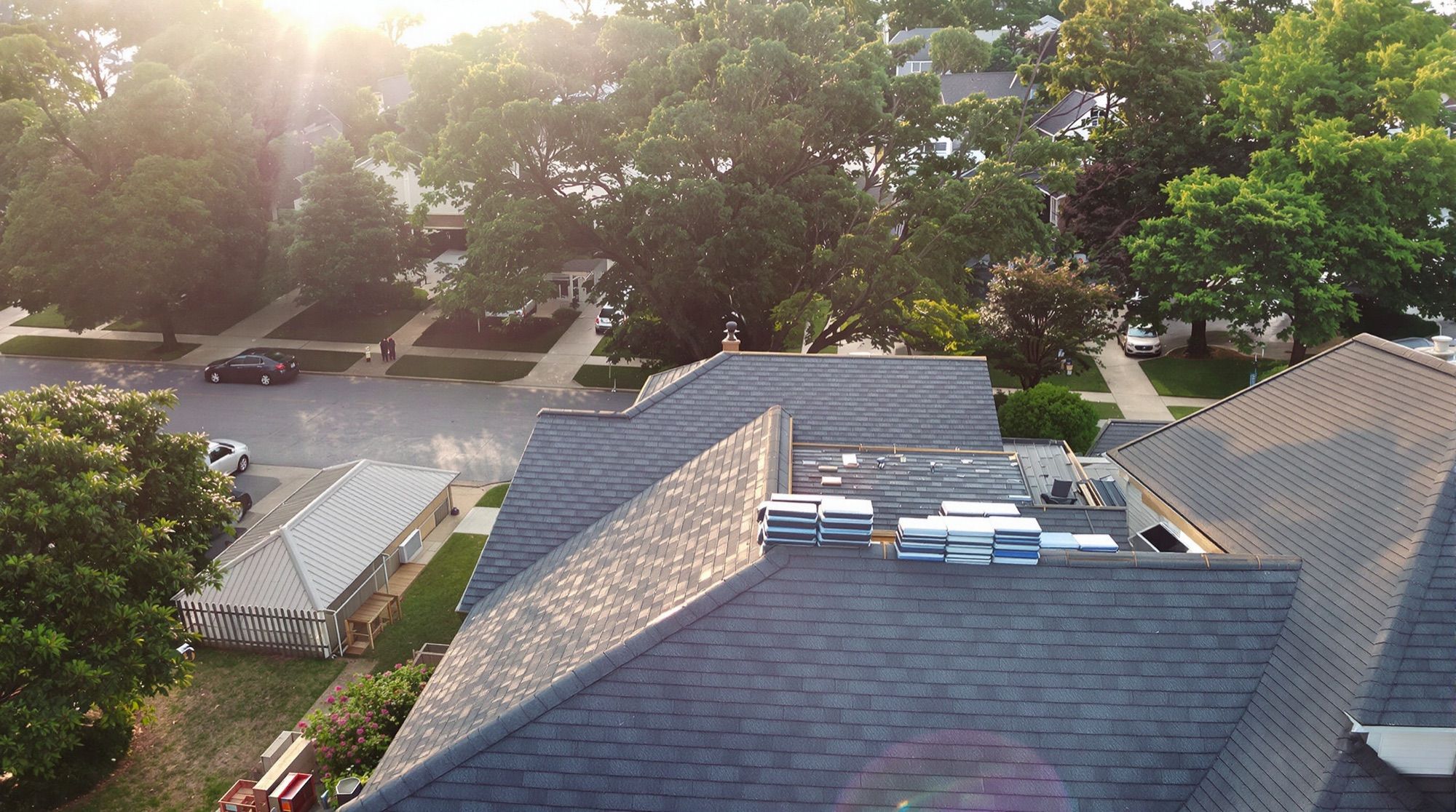
Before a homeowner calls a roofer they found online, they check seven things: proof you're licensed and insured, photos of real roofs, warranty terms, ways to pay, reviews they can verify, an easy way to reach you, and a page that works on their phone. They check fast, with your competitors one tap away in the Map Pack. If an answer takes too long to find, they go back to the search results and try the next roofer.
Below is roughly the order a cautious homeowner works through, and what to put on your site for each item.
1. Proof you're licensed and insured
Roofing has a reputation problem, and homeowners know it. After every storm they hear about a crew that took a deposit and vanished. So the first thing many of them look for is a license number.
Licensing rules vary by state. Some states license roofers directly, some leave it to counties or cities, and some only ask for a contractor registration. Show whatever applies to you:
- Your license or registration number in the site footer, so it's on every page.
- The issuing body next to it. "[State] Contractor License #12345" is clearer than a bare number.
- The exact business name the state lookup shows. If the state has you as "Smith Exteriors LLC" and your site says "Smith Roofing," a careful homeowner will wonder whether they're the same company. A line like "Smith Roofing is a trade name of Smith Exteriors LLC" clears it up.
For insurance, say plainly what you carry (general liability, and workers' comp if you have it) and that you'll send a current certificate of insurance before work starts. Don't post the certificate itself. Policies renew and change, and the homeowner should get a current one anyway.
2. Photos of real roofs near them
Homeowners spot stock photos quickly. A perfect house on a perfect lawn, in a style nobody in their town builds, tells them nothing. A slightly crooked phone photo of a tear-off two streets over tells them you actually work here.
What helps:
- Your own job photos on the homepage and on each service page, not only on a gallery page they have to go looking for.
- A short caption on each: town, material, scope. "Tear-off and replacement, 28 squares, architectural shingles, Lakewood" says more than "Another happy customer."
- Some photos from the ugly middle of the job: rotted decking, the old layers coming off, new underlayment going down. Homeowners rarely see this part, and it shows them what they're paying for.
- Your crew and trucks, if they look like what will actually show up in the driveway.
Get the homeowner's permission before posting their house, and keep house numbers out of the frame.
3. Warranty terms in plain words
"Lifetime warranty" with no details shows up on a lot of roofing sites, and homeowners have learned to ask what it actually covers.
There are usually two warranties in play, and your site should keep them apart:
- The manufacturer's warranty on materials, plus any enhanced system warranty you can register because you hold that manufacturer's certification.
- Your own workmanship warranty, which covers your installation.
For the workmanship warranty, write down four things: how many years, what it covers, what voids it, and how a homeowner files a claim. "Ten-year workmanship warranty on leaks caused by our installation. Email or call us and we'll inspect within [number] business days" is the kind of sentence that settles a nervous homeowner. Use your real terms.
Never advertise a manufacturer warranty level you aren't certified to offer. Homeowners can check with the manufacturer.
4. A way to pay over time
A replacement is rarely planned. When a homeowner is looking at a number they didn't budget for, the question after "can I trust them" is "can I pay this monthly."
If you offer financing through a lender, say so on the roof replacement page, near the estimate form, not buried in the footer. Say who provides it if your agreement allows, and that approval depends on credit. Leave out rates and sample monthly payments unless your lender gives you approved wording, because lending ads come with disclosure rules.
If you don't offer financing, say what you do accept (card, check, insurance payments) so nobody has to call just to ask.
5. Reviews they can check somewhere else
Testimonials that only exist on your own site don't carry much weight. Homeowners know anyone can type a nice quote. What they trust is a review they can also find on Google, with a name and a date.
- Show a handful of recent reviews with first name, town and month, and link to your Google profile so visitors can read the rest.
- Copy them word for word.
- Keep them fresh. A wall of reviews from years ago with nothing recent makes people wonder if the company is still in business.
- Reply to reviews on Google, including the bad ones. Homeowners read the replies to see how you handle problems.
6. A phone number and a short form on every screen
This sounds obvious, and plenty of roofing sites still get it wrong.
- On mobile, a tap-to-call button that stays visible as they scroll. The number should be real text, not part of an image, so the phone can dial it.
- A form with four or five fields: name, phone, address or ZIP, and what's going on (leak, replacement quote, storm damage, inspection). Each extra field gives someone a reason to stop.
- A line that says what happens next and when. "We call back within one business day" works only if it's true. If the phone is answered after hours, say so. If it isn't, say when it will be.
- Instructions for an active leak, if you do emergency tarping.
7. A page that loads in a driveway
A lot of this checking happens on a phone, on cell data, sometimes standing in the yard looking at the damage. Your site has to load there.
Run this test this week: turn off Wi-Fi on your phone, search for your company, open your homepage, and count. Note how long it takes until you can read the headline and tap the phone number. If you're waiting, so is the homeowner, and they have other options in the search results.
The usual causes of a slow roofing site:
- Photos uploaded straight from the camera at full size. A single phone photo can be several megabytes. Resize and compress before upload.
- Sliders and video backgrounds on the homepage.
- Heavy page builders and a pile of plugins, each loading its own scripts.
- Chat widgets, review widgets and tracking scripts stacked on top of each other.
Google's free PageSpeed Insights tool points to the heaviest problems on any page you test.
A ten-minute check you can do tonight
Open your site on your phone and go through this list as if you were a homeowner with a leak:
- License or registration number visible without searching
- Business name matches the state lookup
- Insurance stated, certificate offered
- At least three real project photos on the homepage, with town names
- Workmanship warranty: years, coverage, exclusions, how to claim
- Payment or financing options on the replacement page
- Recent Google reviews shown, with a link to read all of them
- Tap-to-call visible on every screen
- Form with five fields or fewer, and a stated callback time
- Homepage readable within a few seconds on cell data
If you're planning a new site, put these seven items in the brief before anyone talks about colors or fonts. That's how we approach roofing website design, and it's a fair test for any web designer you're talking to.
If several items on that list fail and you want a second opinion on what to fix first, ask for a free SEO inspection. We'll look at your site the way a homeowner does, and at how it shows up in search.